Categories New-posts, Press center

VCHD Cargo model shows eco-driving could save 361,000 litres of diesel annually

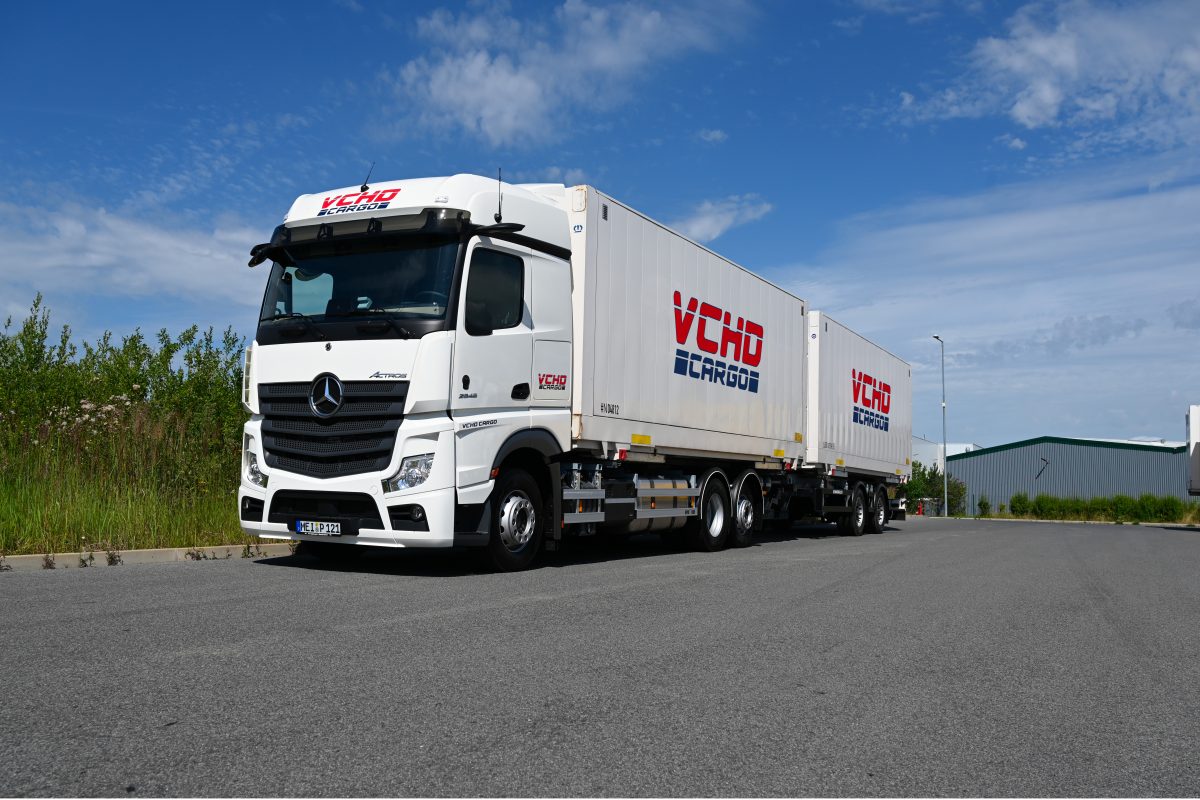
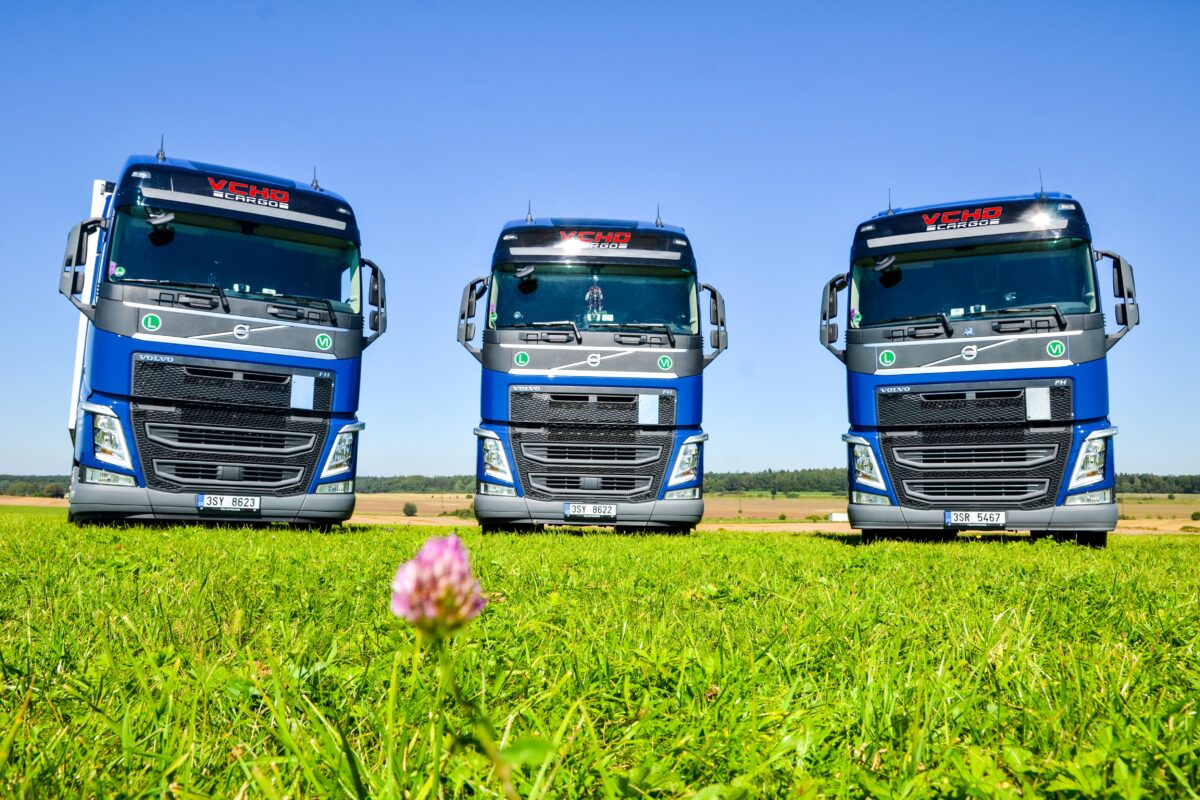
Tři kamiony VCHD Cargo v krajině

The debate on reducing emissions from road transport often focuses on new emissions standards, more advanced engines and the gradual renewal of vehicle fleets. A model developed by the international transport company VCHD Cargo, based on its own operational data, shows the difference eco-driving can make in vehicles already in operation. The key factors are professional drivers, regular feedback and a well-designed company incentive scheme.

VCHD Cargo compared its internal eco-driving scores with the vehicles’ actual fuel consumption. In one month analysed in 2026, a total of 167 VCHD Cargo drivers achieved at least 70 points out of 100 in the eco-driving assessment. Together, they covered more than 1.5 million kilometres. Assuming a modelled fuel-consumption difference of 2 litres per 100 kilometres between scores of around 40 and 70 points, this mileage corresponds to 30,099 litres of diesel per month. If the same monthly mileage and driver composition were maintained throughout the year, the annualised figure would be 361,188 litres of diesel and approximately 950 tonnes of direct CO₂ emissions. This is a modelled scenario based on one month, not a direct measurement over twelve months or the exact saving achieved on every individual journey.

Key figures from the modelled calculation

  • 167 VCHD Cargo a.s. drivers achieved at least 70 points out of 100.
  • Together, these drivers covered 1,504,950 kilometres during the month analysed.
  • A modelled fuel-consumption difference of 2 l/100 km corresponds to 30,099 litres of diesel per month.
  • At the same mileage throughout the year, this would amount to 361,188 litres of diesel.
  • The annualised figure corresponds to approximately 950 tonnes of direct CO₂ emissions from diesel combustion.
  • Based on the average net carbon uptake of EU forests, an indicative area equivalent is approximately 450 hectares of forest, or about 640 standard UEFA football pitches.
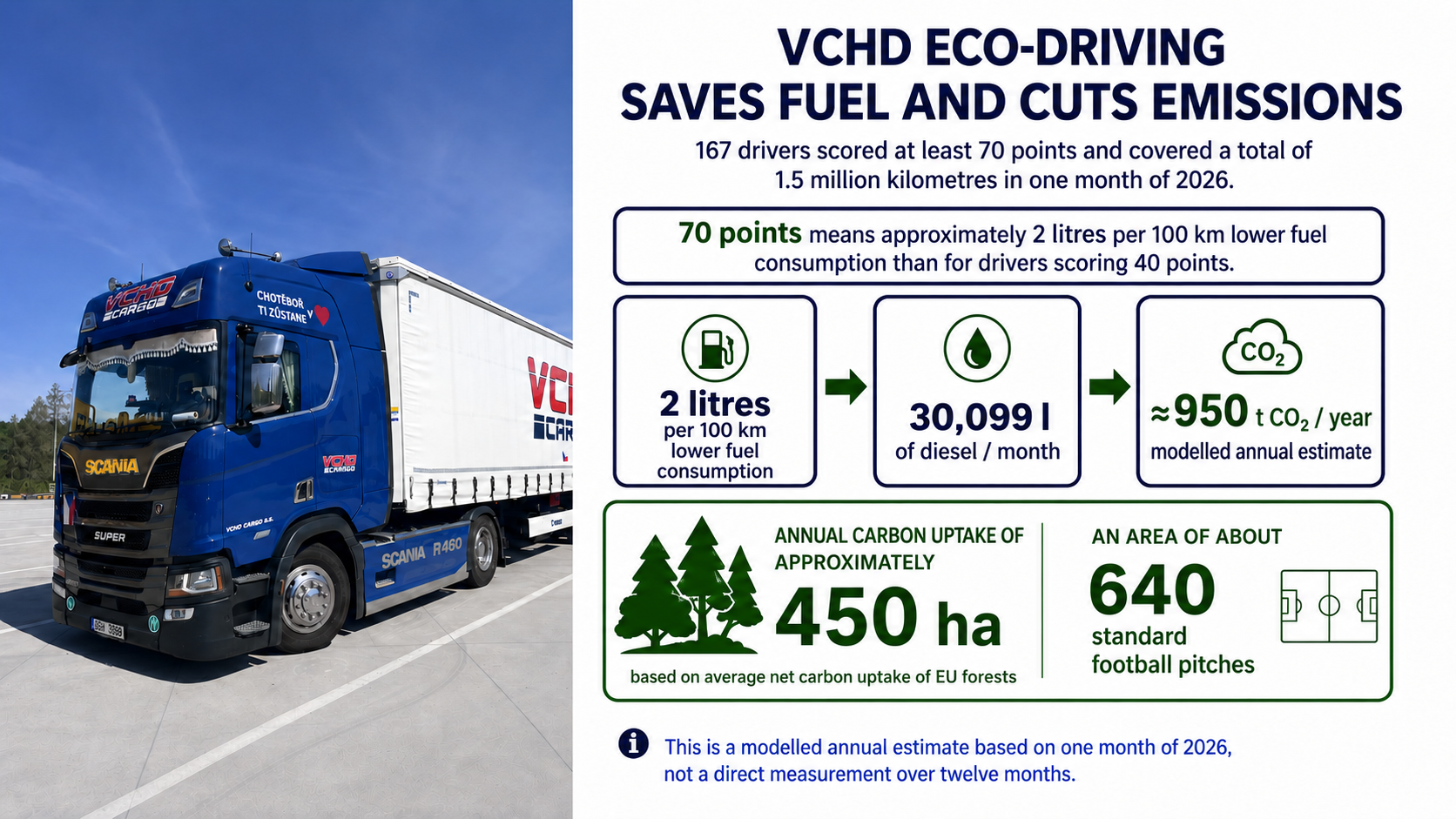
VCHD eco-driving model infographic: 2 litres per 100 km difference, 30,099 litres of diesel per month and approximately 950 tonnes of CO₂ in the annual estimate. Forest-area equivalent: 450 hectares, about 640 football pitches.
VCHD Cargo eco-driving model. Click to view the infographic at full size.

Lower fuel consumption starts behind the wheel

The European Union is gradually tightening the technical requirements for vehicles. The Euro 7 standard sets limits for pollutant emissions from heavy-duty vehicles and also covers particles from brakes and tyres, but it does not set fuel-consumption limits or CO₂ emissions targets. It will apply to new types of heavy-duty vehicles from 29 May 2028 and to all new heavy-duty vehicles from 29 May 2029. Separate European rules also set targets for manufacturers to reduce CO₂ emissions from new heavy-duty vehicles. Their effect will emerge gradually as new vehicles are manufactured and fleets are renewed. Transport companies, however, can influence driving style today.

Every unnecessary acceleration, late braking manoeuvre or failure to make use of the vehicle’s momentum results in additional fuel consumption. For a single vehicle, the difference may not appear significant at first glance. But when the same situations occur every day, involving hundreds of drivers and millions of kilometres, they create considerable scope for savings.

VCHD Cargo therefore takes a long-term approach that focuses not only on advanced technology but also on driver behaviour. It has developed its own system combining objective assessment, daily feedback, training and financial rewards based on the results achieved.

How VCHD Cargo assesses eco-driving

VCHD Cargo’s internal system assesses eco-driving on a scale of up to 100 points. It monitors factors including smooth driving, anticipation, coasting without fuel consumption, maintaining a constant speed, harsh acceleration and braking, and driving at high speed under load. Seventy points represents a practical and attainable threshold for a driver who actively focuses on eco-driving, monitors their results and applies the recommended habits in everyday operations. During the month analysed, a total of 167 of the 268 drivers assessed achieved at least 70 points—more than 62%.

A highly rated driver does not necessarily have to drive slowly. What matters is monitoring traffic, responding in good time, making use of the moving vehicle’s energy and limiting situations in which unnecessary braking has to be followed by additional fuel consumption to regain the original speed. VCHD Cargo drivers can view their assessment for the previous day on their in-cab tablet, including the individual areas on which they should focus. This daily digital feedback is supplemented by the company’s practical guide, training and financial rewards based on the monthly result achieved. Drivers therefore know what is being assessed, can monitor their own progress and have a concrete incentive to improve.

“Measurement alone has never saved a single litre of diesel. Drivers must understand their result, have rapid access to it and have a reason to improve. We have extensive experience of combining data, daily feedback, training and financial rewards. This enables us to take eco-driving out of spreadsheets and put it into practice,” said Petr Kozel Jr., Chief Operating Officer and Vice-Chairman of the Board of Directors of VCHD Cargo a.s.

Technology and motivated drivers complement each other

VCHD Cargo does not regard eco-driving as a substitute for more advanced vehicles or European emissions requirements. It does, however, show that transport companies do not have to wait for the next generation of technology before reducing fuel consumption.

“Manufacturers must develop vehicles that are increasingly cleaner and more fuel-efficient. But it is the transport company that determines how efficiently those vehicles actually operate. We have developed a system that gives drivers data, clear rules and financial rewards based on their results. The results show that when the system is properly designed, the majority of drivers make a genuine effort to drive economically,” added Petr Kozel Jr.

A well-designed eco-driving system can already have an effect within the existing fleet. In addition to lower fuel consumption, it supports smoother operations, reduces wear and tear on vehicles and promotes safer driving.

VCHD Cargo has long focused on economical and defensive driving. This model-based data analysis follows the internal VCHD EcoDrive Challenge 2025, in which the company recognised drivers with the best and most significantly improved driving styles.

Calculation methodology

To quantify the potential benefits, VCHD Cargo compared historical operational data on drivers’ scores with the vehicles’ actual fuel consumption. The data showed a statistical relationship: as scores increased, average fuel consumption decreased. However, consumption is also affected by the vehicle, season, load and route characteristics. The company therefore used two model estimates:

  1. A model taking the specific vehicle and calendar month into account calculated the difference between scores of 40 and 70 points at approximately 1.83 litres per 100 kilometres.
  2. A second model, based on the overall relationship between the assessment score and fuel consumption, indicated a difference of approximately 2.38 litres per 100 kilometres.

For the calculation presented publicly, VCHD Cargo therefore used the rounded figure of 2 litres per 100 kilometres. This lies between the results of the two models. The models confirm a relationship in the operational data, but do not in themselves establish a causal saving for every journey, nor do they isolate all the effects of load and route. The comparison between 40 and 70 points was chosen deliberately. In VCHD Cargo’s internal system, a score of around 40 points corresponds to limited use of the recommended driving habits, while 70 points represents an attainable threshold for an active and consistent approach to eco-driving.

Drivers with a score of at least 70 points covered a total of 1,504,950 kilometres during the month analysed.

1,504,950 km ÷ 100 × 2.0 l = 30,099 litres of diesel

If the same mileage and driver composition were maintained for twelve months:

30,099 l × 12 = 361,188 litres of diesel

A factor of 2.6308 kilograms of CO₂ per litre of diesel was used to convert fuel consumption into direct emissions. This factor is derived from the ratio between the real-world emissions of 181.0 g CO₂/km and fuel consumption of 6.88 l/100 km stated in the European Commission report:

361,188 l × 2.6308 kg CO₂/l ≈ 950,213 kg CO₂

Assuming the same monthly mileage, the modelled annualised figure would therefore correspond to approximately 950 tonnes of direct CO₂ emissions.

This is an annualised calculation based on one month analysed, not a direct measurement of twelve consecutive months. The calculation covers direct emissions from diesel combustion, not the fuel’s entire life cycle.

The forest-area equivalent is based on average net carbon uptake of 332.6 million tonnes of CO₂e per year between 2020 and 2022 and a total EU forest area of 159 million hectares:

332.6 million t CO₂e ÷ 159 million ha = 2.09 t CO₂e/ha/year

950.2 t CO₂ ÷ 2.09 t CO₂e/ha/year ≈ 454 ha ≈ 450 ha

An area of 454 hectares corresponds to approximately 636 football pitches measuring 105 × 68 metres, or 640 standard UEFA football pitches when rounded. This is merely an illustrative area equivalent, not an offset of emissions through afforestation.

Sources

Categories New-posts, Press center

VCHD Cargo rewards drivers who drive safely, smoothly, and with fuel consumption in mind

Safety and savings take center stage: results of the EcoDrive Challenge 2025

The transport company VCHD Cargo has announced the results of the VCHD EcoDrive Challenge 2025 competition, which focused on promoting economical, smooth, and defensive driving in long-distance transport. All of the company’s branches in the Czech Republic took part in the competition, and drivers who drove at least 10,000 kilometers during the competition were evaluated. The competition focused exclusively on long-distance export routes, where driving style has a significant impact on fuel consumption, safety, and the technical condition of vehicles.

The EcoDrive Challenge ran from September to November 2025 and was based on objective data from the Perfect Drive telematics system. The company has been using this system for a long time to evaluate driving style and provide feedback to drivers. The aim of the competition was not only to compare results, but above all to motivate drivers to take a conscious and professional approach to driving and to further improve their skills.

VCHD Cargo has long focused on economical and defensive driving and regularly trains its drivers in this area. This is not only about reducing fuel consumption, but also about increasing road safety, traffic flow, lower vehicle wear and tear, and reducing the impact on the environment.

The competition was evaluated based on monthly reports from the Perfect Drive system and was based on four indicators that were not chosen at random. They primarily monitor driving smoothness, the driver’s ability to anticipate traffic situations, and respect for speed limits. These factors have a direct impact on road safety, fuel consumption, equipment wear and tear, and the amount of emissions produced. For VCHD Cargo, economical driving does not mean inefficient driving, but a calm, anticipatory, and professional driving style.

The overall results of the competition were dominated by the Kladno branch, whose drivers took all three top places. The winner was Ladislav Albini with 95.73 points, Marek Pčola took second place and Stanislav Pátek finished third. The company also recognized the best drivers from other branches, namely Lukáš Koblížek from Brno and Jiří Krupauer from Havlíčkův Brod.

In addition to the main evaluation, specialists in individual parameters and drivers with the greatest improvement in results during the competition – the so-called jumpers of the month – were also recognized. The winners received valuable prizes and diplomas. The competition fulfilled its goal and served not only as a comparison of performance, but above all as a motivational tool promoting safe and responsible driving.

“We greatly appreciate our drivers. They are the ones who represent VCHD Cargo every day on roads across Europe. That is why we work with them on a long-term basis, train them regularly, and provide them with feedback based on objective data. We see the EcoDrive Challenge as a reward for professionalism and the desire to constantly improve,” said Petr Kozel Jr., Chief Operating Officer and Vice-Chairman of the Board of Directors of VCHD Cargo a.s.

VCHD Cargo currently employs 500 people in Europe and has long been one of the transport companies that emphasizes safety, efficiency, and a responsible approach to transport. The positive response to the competition and the high participation across branches confirmed that the chosen approach brings concrete and measurable results. The company is therefore already planning to organize the EcoDrive Challenge again in 2026.

How VCHD Cargo measures driving style – explanation of parameters

The EcoDrive Challenge 2025 used the Perfect Drive system, which objectively measures driving style. The evaluation consisted of four main parameters:

  • Maximum use of Ecoroll + driving without consumption
    Monitors the driver’s ability to use the vehicle’s inertia and range without accelerating. Helps reduce fuel consumption and emissions, saves the engine and drivetrain.
  • Most time using constant acceleration pedal/cruise control
    Measures the time spent at a steady speed when the driver keeps the accelerator in a constant position or uses cruise control. Smooth driving minimizes sudden acceleration and deceleration, resulting in lower fuel consumption and less wear and tear on the vehicle.
  • Lowest time in overdrive above 85 km/h
    Shows how much time the driver spends at high speeds with the accelerator pedal fully depressed. A low value indicates respect for speed limits, smooth driving, and use of engine braking.
  • Best driver foresight
    Assessed as a combination of several aspects: smooth driving, use of coasting without throttle, frequency of sudden braking, sudden acceleration, and time spent driving above 85 km/h. This parameter shows the driver’s ability to plan ahead, reduce the risk of accidents, and optimize fuel consumption.
Categories New-posts, Press center

VCHD Cargo Group last year

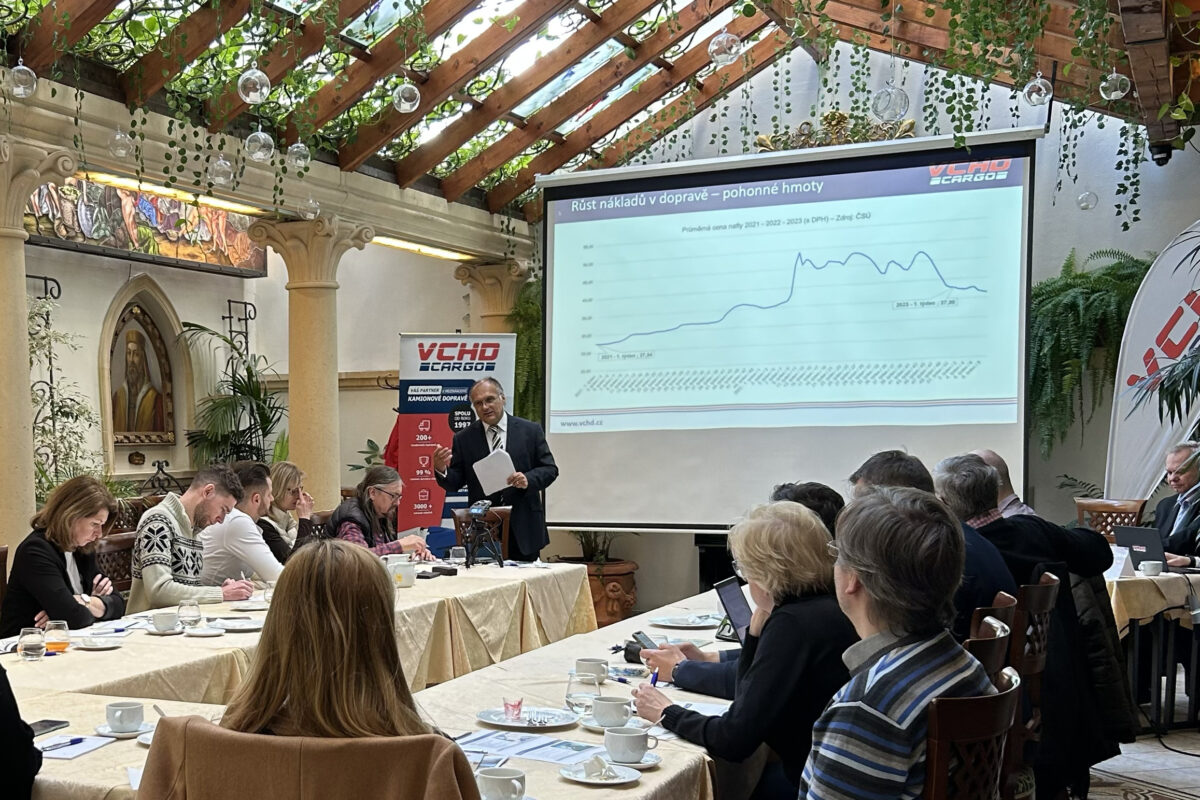
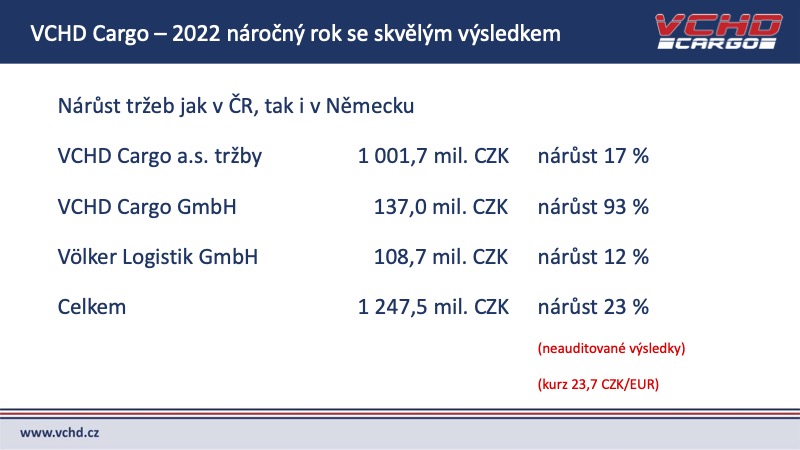
The transport company VCHD Cargo a.s. has had a successful year in 2022. According to preliminary results, its revenues exceeded one billion Czech crowns in the Czech Republic alone, representing a 17 percent increase compared to the previous year. The company also significantly strengthened its position in the German market. The revenues of its subsidiary, VCHD Cargo GmbH, increased by a record 93 percent. The number of employees in the group also increased to 428.

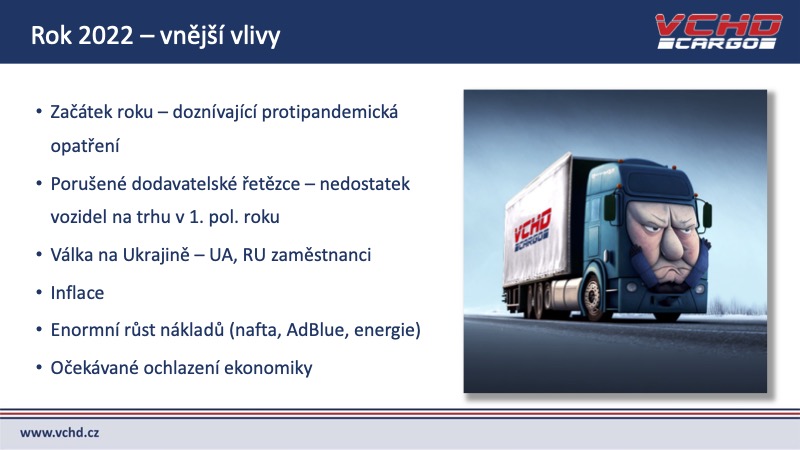
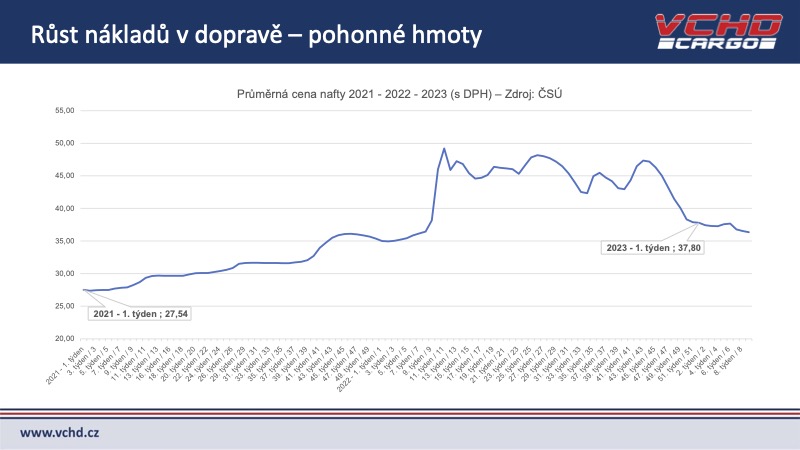
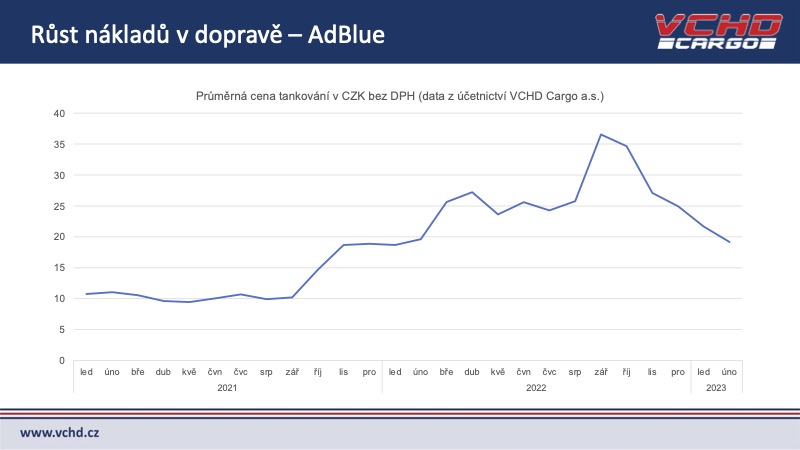
Transport company VCHD Cargo a.s. celebrated 25 years of operation on the Czech market last year. The balance of the entire quarter-century is more than positive. The company has been steadily growing in both the breadth of services provided and their quality, and has also experienced stable growth in revenue. However, 2022 brought demanding challenges to the land transport industry. “Last year saw a series of unprecedented events that affected the whole world, and land transport had to cope with their immediate and long-term impacts,” explains Ing. Petr Kozel, CEO and Chairman of the Board of VCHD Cargo a.s., adding, “with the war in Ukraine, fuel prices soared enormously, inflation increased significantly, and the labor market situation worsened. Nevertheless, we managed to strengthen our position in both of our markets, and to do so quite significantly.”

According to preliminary results, VCHD Cargo a.s. achieved revenues of 42.3 million euros in the Czech Republic. New acquisitions and orders from existing customers are behind the 17% growth. In addition, VCHD Cargo has also been successful in the German market. It entered the market in 2019 by establishing VCHD Cargo GmbH, and in 2021 it acquired the transport company Völker Logistik. The highest growth, by a record 93%, was achieved by VCHD Cargo GmbH, which specializes in long-distance transport. The revenues of Völker Logistik, which specializes in regional transport throughout Germany, grew by 12%. Overall, the revenues of the entire group increased by 23% to 52.5 million euros.

“We are very proud of how we managed to cope with last year. We owe it to our long-term strategy and our people, especially the drivers, who tirelessly travel across Europe every day,” says Petr Kozel.

The VCHD Cargo group currently employs 428 people in both countries, with approximately two-thirds of them being professional drivers. The company invests in their education and strives to make their demanding work as easy as possible, whether through the digitalization of processes and communication, which reduces administrative burden, or through high-quality and safe technology.

The VCHD Cargo group has its own fleet of more than 220 tractors and 160 trailers. The average age of the fleet is less than 3 years, and the company invests significantly in its renewal every year. In just last year, it purchased transportation equipment for leasing, credit, or cash with a total value of around 6.3 million euros.

Investments in VCHD Cargo have also flowed into its branches. At its headquarters in Kladno, the company has completed the construction of a new truck parking lot, while in Havlíčkův Brod, it has finished the reconstruction of the offices, as well as the interior and exterior of the branch, creating a pleasant and comfortable environment for its employees. “We are aware of how important it is for our people to feel good here,” explains Petr Kozel, adding, “our industry has been facing a drain of workers for many years, and we are constantly working to retain our team of good people and be an attractive employer for newcomers to the industry.”

In addition to being a good employer, VCHD Cargo is also a quality provider of transportation services and a reliable business partner. This is evidenced by the AAA Platinum Excellence certificate from the prestigious agency Dun & Bradstreet, which VCHD Cargo has received with the highest possible rating, confirming its financial stability, healthy financial ratios, and business conduct, continuously for a period of five years. VCHD Cargo has thus become one of the most trustworthy companies in the Czech Republic. Last year, VCHD Cargo also placed second in the Central Bohemian Region in the prestigious ranking of Czech Leaders.

In 2023, VCHD Cargo plans to extensively utilize its new investments and aims to grow in both transportation and forwarding in both the Czech Republic and Germany.

Categories New-posts, Press center, Uncategorized

VCHD Cargo launches new international route

The transport company VCHD Cargo has started operating an international route between Nuremberg and Wrocław. The line, with regular daily departures, has expanded the company’s portfolio to 112 routes, which go to all corners of Europe every day.

VCHD Cargo is a specialist in line haulage, which is used by logistics, manufacturing and retail companies. Within Europe, it offers international connections not only with the start or end of the route in the Czech Republic. One of these lines is the Nuremberg-Wrocław (Wroclaw, Poland) route, which has been in operation since the end of last year and on which the company transports consumer goods in tandem sets with swap bodies. “The line from Bavaria to Wroclaw, Poland, runs on an optimised route that takes advantage of the possibility of driver changes, both at our headquarters in Kladno and in the vicinity of Chemnitz, Germany, where many of our activities are also concentrated,” says Ing. Petr Kozel, CEO and Chairman of the Board of Directors of VCHD Cargo a.s., and adds, “The swap bodies that we deploy on the line have a number of advantages for this type of transport and our customers and drivers appreciate, for example, the possibility of pre-loading them, which speeds up the clearance of the train at the loading point.”

VCHD Cargo has a fleet of quality tractors and trailers and the average age of its fleet is around three years. All vehicles in the fleet are also equipped for the transport of dangerous goods under the ADR agreement, and many of them allow temperature-controlled transport suitable, for example, for the distribution of foodstuffs, paints and coatings, cosmetics and other temperature-sensitive consumer goods.

The company’s experienced drivers guarantee safe and economical driving, and the company’s staffing policy ensures the smooth operation of the lines with “relief” drivers who can replace their colleagues on any line if required. International routes are planned by the dispatchers with an optimum combination of fast delivery and economical driving, and the dispatch centre is available 24 hours a day, 7 days a week.

Categories New-posts, Press center

VCHD Cargo supported the purchase of defibrillators

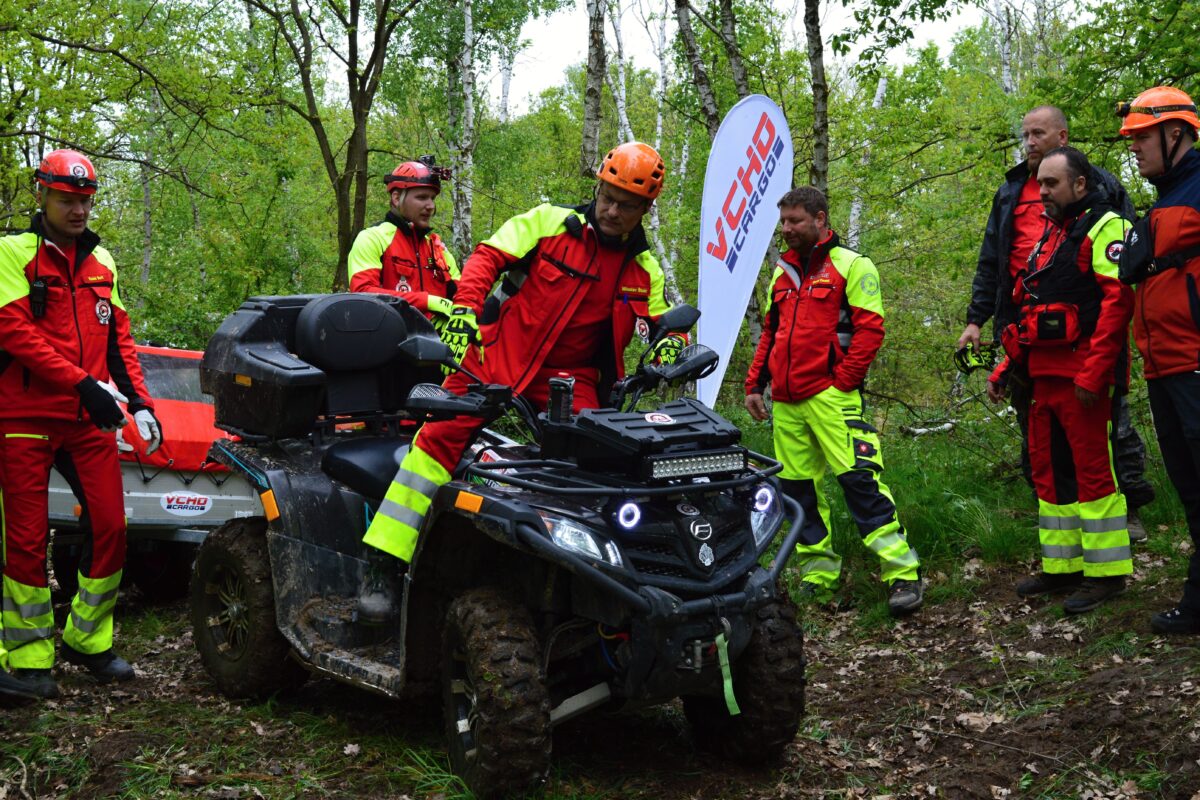
The transport company VCHD Cargo continues its cooperation with the largest Search & Rescue volunteer rescue organisation in the Czech Republic. This year’s support from VCHD Cargo enabled the Czech SAR Team volunteers to purchase sophisticated automated external defibrillators.

The Czech SAR Team is an independent SAR (Search and Rescue) association. It was founded in 2019 and its main focus is searching for missing and lost persons across the Czech Republic using ATVs and other equipment available to its members. Since 2021, according to the Integrated Rescue System Act, the association is part of the Integrated Rescue System as an “Other component of the IZS”. In cooperation with it, it cooperates not only in searching for people in inaccessible terrains, but also helps in natural disasters such as floods, forest fires and others. In addition, there is also an URBAN Team within the association, which specializes in searches in cities and other built-up areas.

This is the third year that VCHD Cargo has supported the volunteer rescue organisation, the first initiative coming from a company employee who is himself a member of the SAR association. “We see the importance of volunteer work and the members of the Czech SAR Team convinced us of the importance of their work,” explains Ing. Petr Kozel, CEO and Chairman of the Board of Directors of VCHD Cargo a.s., and adds, “They regularly search for lost children, seniors or other vulnerable groups of people free of charge and are involved in many other areas, for example, they helped in South Moravia after the tornado in 2021.”

The Czech SAR Team has conducted 113 searches, 28 technical interventions in partner communities, 23 recoveries and 1 humanitarian deployment. It can be called upon by any major component of the Integrated Rescue System and relatives of the person being searched for. The team’s departure to the incident is within 60 minutes from the time of reporting (unless the team is already at another intervention).